06:17 pm

Meta broke ground on a new AI data centre in Alberta on July 8, 2026. The project costs more than CA$13 billion. It is Meta's first data centre in Canada and its 33rd worldwide. Aurixlab is based in Calgary, and Alberta rarely sees a technology investment this large.
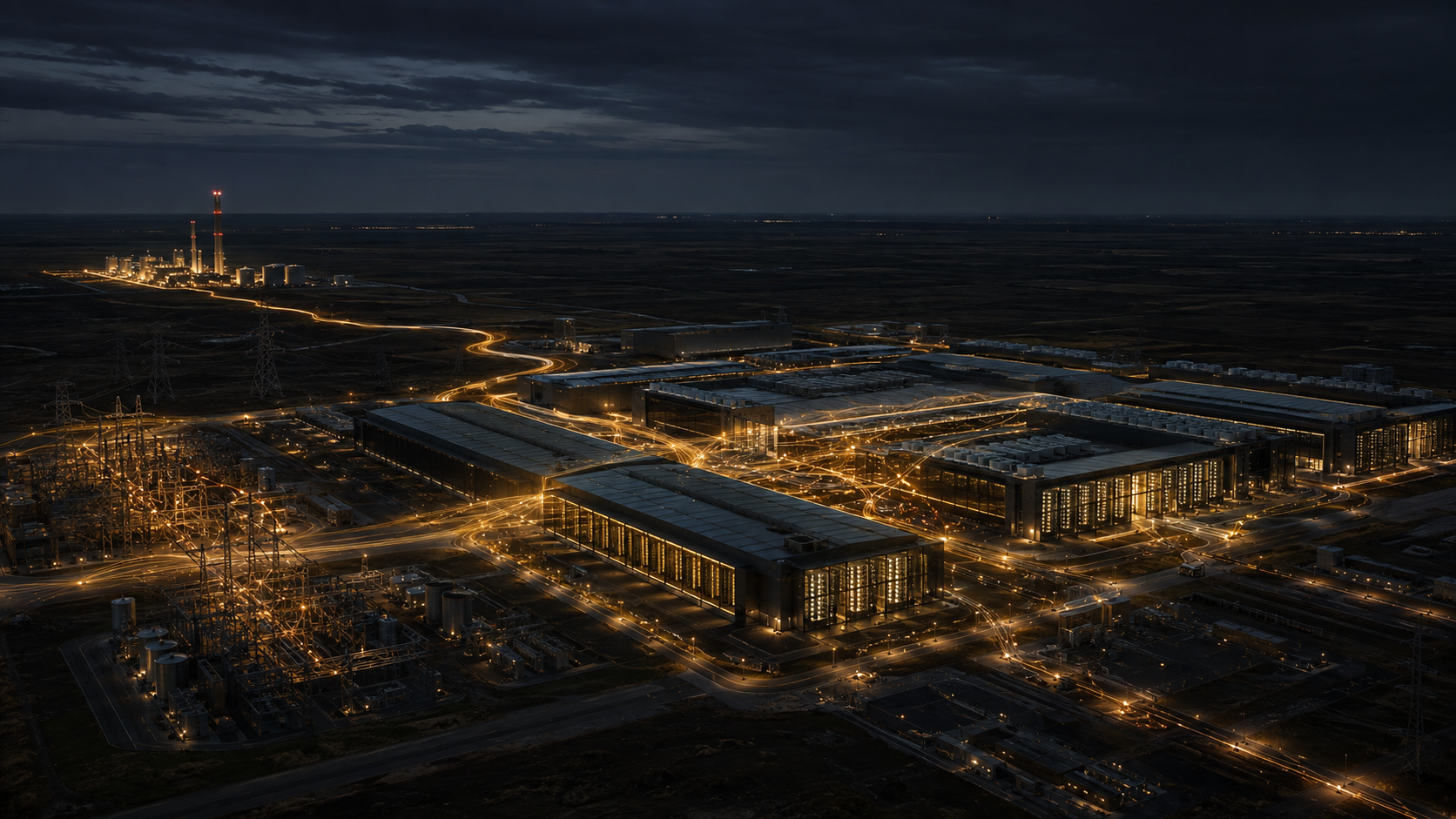
Meta broke ground on a new AI data centre in Alberta on July 8, 2026. The project costs more than CA$13 billion. It is Meta's first data centre in Canada and its 33rd worldwide. Aurixlab is based in Calgary, and Alberta rarely sees a technology investment this large.
This guide covers the data centre's location, size, and power source. It also covers the construction timeline, the advantages, and the concerns. Local reaction gets its own section too. Last, it checks a common claim: that this is Canada's first data centre.
The data centre sits in Sturgeon County, just east of Gibbons. Sturgeon County is part of Alberta's Industrial Heartland, north of Edmonton. The site sits roughly an hour's drive from downtown Edmonton. Premier Danielle Smith said the site sits on industrial land, not farmland or housing.
The campus covers 1,750 acres. That footprint beats Stanley Park in Vancouver. Sturgeon County zoned this land for data centres back in April 2022. Council added "Data Processing Facilities" as a permitted land use that year.
The data centre draws one gigawatt of power at launch. Meta can scale that up to 1.8 gigawatts over time. For comparison, the entire city of Edmonton uses about 1.4 gigawatts. The building covers close to 270,000 square metres.
That equals roughly 33 Canadian Football League fields. Meta plans to build the campus in phases. The full gigawatt does not arrive at once. The company calls the facility "AI-optimized."
That means its design centres on training and running Meta's AI systems. It is not built for general cloud computing. Meta operates 33 data centres worldwide, and this is the newest one.
A dedicated natural gas plant powers Meta's data centre. Developers call this plant the Greenlight Electricity Centre. Greenlight represents a separate $4.6 billion investment. Three partners are building it: Pembina Pipeline, Morgan Stanley Infrastructure Partners, and Kineticor Asset Management.
The gas-fired, combined-cycle plant generates 932 megawatts. Greenlight enters service in the second half of 2030. Until then, Alberta's regular power grid supplies the data centre. Meta says it fully funds the new generation and grid upgrades this project needs.
The company also says these upgrades improve grid reliability for other Alberta customers. Meta says it matches the data centre's electricity use with 100% clean, renewable energy credits. Greenlight itself still runs on natural gas.
On water, the facility uses a closed-loop, liquid-cooling system with dry cooling. Meta says this design avoids ongoing water withdrawals from the surrounding area. Premier Smith compared the facility's water use to a typical Alberta golf course.
Clark Builders and PCL Construction lead construction. They work together through a joint venture called Frost Collective. Engineering firms Stantec and SLB support the delivery team. Alberta's major projects registry estimates a three-year construction period.
Meta started site preparation in May 2026, right after the county issued a grading permit. The project needs more than 3,000 construction workers at peak activity. Once running, it supports over 300 permanent operational jobs. The separate Greenlight plant adds about 1,000 more construction jobs and 30 long-term roles.
No, it is not. Alberta already runs about 20 smaller data centres today. Other data centres also operate across Canada, including in Quebec and Ontario. Bell Canada is even building a separate 300-megawatt project near Regina, Saskatchewan.
The accurate claim is narrower than "Canada's first." This is Meta's first data centre in Canada. Meta runs 33 data centres worldwide.
Alberta's technology minister, Nate Glubish, calls it the largest data centre project in Canada's history. He bases that on its size and investment value. That framing holds up well. No other Canadian data centre matches its gigawatt scale or its $13 billion price tag.
The data centre brings direct economic benefits to Alberta. Premier Smith estimates the project generates at least $250 million a year for Alberta. That money comes through taxes and royalties. Sturgeon County Mayor Alanna Hnatiw estimates the county's own share separately.
She puts it at up to $40 million a year in tax revenue. Meta also committed CA$60 million toward local infrastructure. That includes road and water upgrades. The company plans annual Data Center Community Action Grants for nonprofits in the region.
Construction alone employs over 3,000 workers. The facility supports 300 permanent jobs once it opens. Beyond this one project, Alberta wants to become a data centre hub more broadly. Minister Glubish wants $100 billion in data centre construction within five years.
His office was already in talks with about 60 companies by mid-2026. That is up from roughly a dozen companies in late 2024. Alberta hopes bigger investors keep following Meta's lead.
Water and power use top the list of concerns. Meta says its cooling system needs no ongoing water withdrawals. Residents and environmental groups remain skeptical of that claim. Sturgeon County resident Jessica Tomashiro opposes the project for exactly that reason.
She cited high water and electricity demand as her reason. Emissions raise a separate concern. The Greenlight plant runs on natural gas. Alberta's electricity grid already draws 60% of its power from gas too.
David Pickup leads the Pembina Institute's electricity program. He said Alberta favours natural gas over cheaper, lower-carbon alternatives. He warned that data centres and LNG exports together could raise power prices. Alberta consumers would feel that impact directly.
Greenpeace Canada's Keith Stewart called for a moratorium on large-scale data centres. He wants it to last until Canada passes stronger environmental rules. Local residents raised a separate concern about the approval process itself. Many felt Sturgeon County council approved the project too fast.
Reactions from Sturgeon County residents are genuinely mixed. Sturgeon County's own Facebook announcement post drew dozens of negative reactions. At least 44 people responded with anger. Resident Debbie Cook said her property sits close to the proposed site.
She felt the county gave residents no real say. That input should have come before approval, she said. On August 2, 2026, protesters gathered outside the Sturgeon County office in Morinville. News outlets reported different crowd estimates, ranging from dozens to hundreds of demonstrators.
Organizer Ben Baril is a 20-year-old university student. He said he did not expect that much turnout on a rainy long weekend. Mayor Hnatiw has pushed back against some criticism. She said Sturgeon County toured one of Meta's Utah data centres in spring 2025.
The county heard positive feedback from nearby residents there. She has also pointed to the county's projected tax revenue as a direct benefit. That figure reaches up to $40 million a year for local residents. The debate has pulled provincial politicians into the conversation too.
NDP MLAs held a public consultation session in St. Albert in early August. Rakhi Pancholi, Nathan Ip, and Janis Irwin led the session. More than 100 residents attended. They raised questions the province never addressed before approving the project.
Where exactly is Meta's Alberta data centre located? Meta's data centre sits in Sturgeon County, Alberta. It is just east of Gibbons, roughly an hour from Edmonton. The site covers 1,750 acres inside Alberta's Industrial Heartland. That zone is an established industrial area, not farmland or housing. Premier Danielle Smith confirmed the location in July 2026.
How much is Meta investing in the project? Meta is investing more than CA$13 billion in the data centre itself. A separate consortium is investing another $4.6 billion in the Greenlight Electricity Centre. That natural gas plant exists specifically to power the facility. Together, the two projects total nearly $18 billion in new investment for Alberta.
Is this really Canada's first data centre? No. Alberta already has about 20 smaller data centres, and other provinces operate their own. It is Meta's first data centre in Canada, out of 33 worldwide. It also ranks as Canada's largest data centre project by scale and investment.
How many jobs will the data centre create? The project needs over 3,000 construction workers at peak building activity. Once operational, it supports more than 300 permanent jobs. The related Greenlight power plant adds roughly 1,000 more construction jobs and 30 long-term positions. Together, the two projects support thousands of Alberta workers.
When will the data centre be fully operational? Alberta's major projects registry estimates a three-year construction period. Meta started site preparation in May 2026. The dedicated Greenlight power plant enters service in the second half of 2030. Until Greenlight comes online, the regular Alberta grid supplies power. The data centre reaches full scale on a similar timeline.
Aurixlab keeps covering major Alberta business and technology stories. Check back for updates as construction continues. Alberta's data centre story is far from over.